


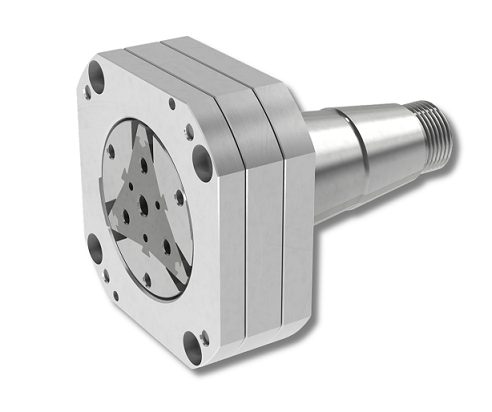
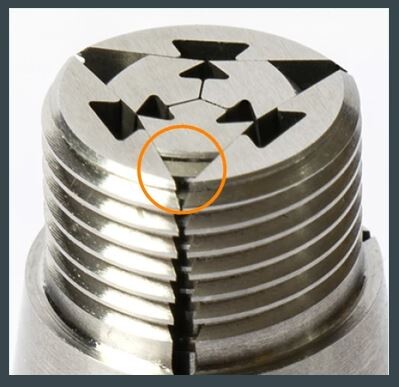
Collapsible cores enable the release of parts with complex internal threads and undercuts, combining a compact design with shorter production cycles. Each core is individually designed and supplied as a fully assembled module, ready for installation. They are suitable for single-cavity and multi-cavity injection molds.
Application-specific configurations
Configurations with 6, 8, and 12 segments are available for diameters from Ø6 to Ø400 mm. The choice depends on the diameter, depth, and geometry of the feature to be released.
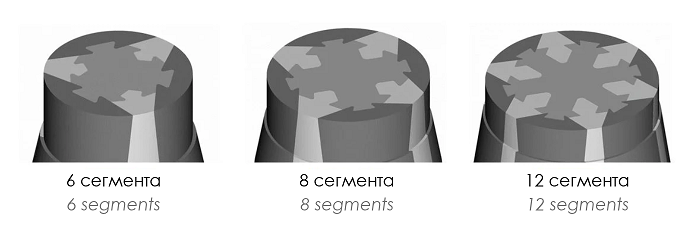
- 6 segments: standard solution for undercuts up to 12% of the core diameter.
- 8 segments: allows undercuts up to 14%, or up to 23% in injection molds with a two-stage ejection system.
- 12 segments: suitable for special applications, with undercuts up to 14%.
Shorter cycles and compact design
In addition to internal threads and blind threaded holes, collapsible cores enable the release of geometries that cannot be produced using conventional unscrewing solutions.
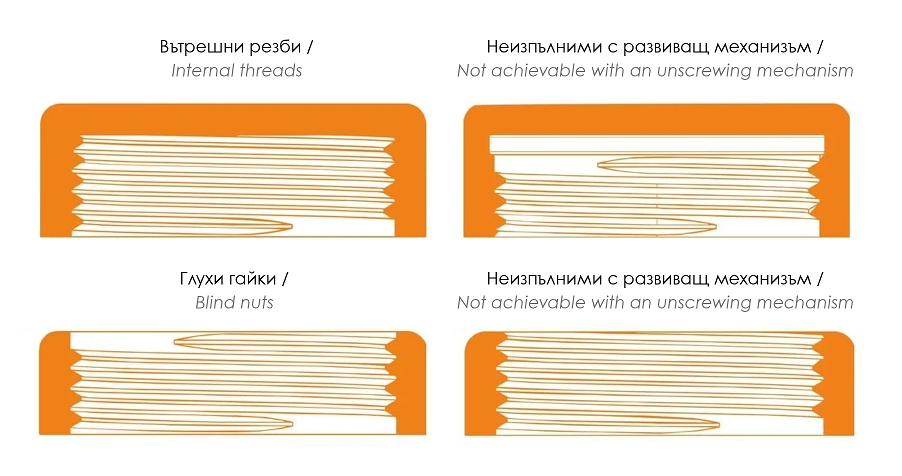
During ejection, the core collapses inward and moves away from the undercut. This allows release to begin before the part has fully solidified. According to CUMSA, the reduced cooling requirement can shorten the overall cycle time by approximately 33% compared with unscrewing solutions.
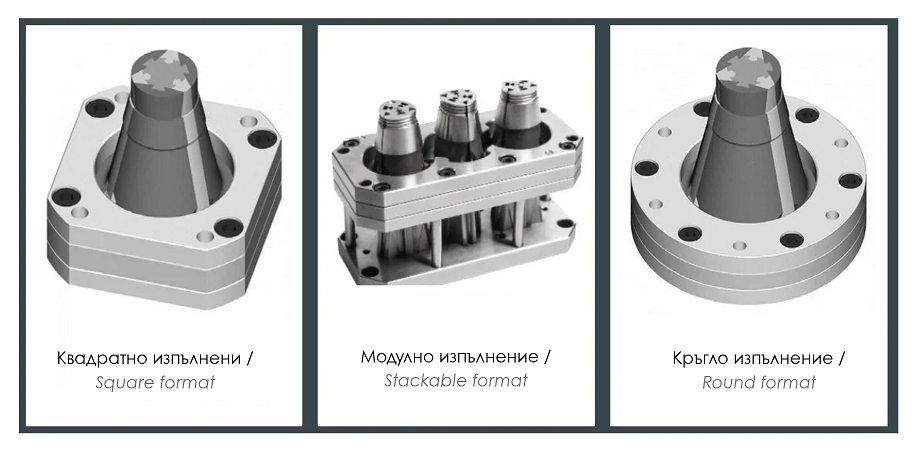
The compact design reduces the space required in the mold and allows closer component spacing in multi-cavity applications. Retaining rings are available in square and round formats, as well as a shared-ring configuration for multiple cores.
Protection and long service life
Integrated safety stops prevent collisions between segments when fully opened or in the event of overtravel. The simplified design makes servicing and maintenance easier.
The cores are available in two versions:
- Standard version – for applications requiring up to 500,000 cycles.
- DLC-coated version – for applications requiring up to 1 million cycles.
The DLC coating provides high hardness and a low coefficient of friction. It reduces polymer adhesion and protects against corrosion caused by released gases. It is recommended for injection molds operating at high temperatures.
Material

Contact us for more information and guidance on choosing the right solution for your project.



Did you like the article?
Please rate it with the stars below.