


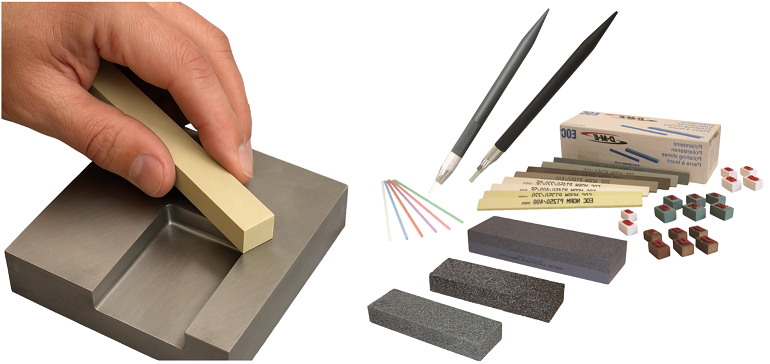
Stone polishing is the second stage in the overall polishing process, following the initial coarse grinding. While the first stage focuses on removing larger irregularities and shaping the workpiece, stone polishing aims to level and smooth the surface, preparing it for the final polishing with pastes or diamond suspensions.
This stage uses stones with varying grit sizes, starting with coarser ones (to remove traces of the previous processing) and progressing to increasingly finer stones that give the surface smoothness and a uniform matte sheen. Proper execution of this second stage is critical, as any missed scratch or defect will be clearly visible after the final polishing.
Depending on the grit size, the stones can be:
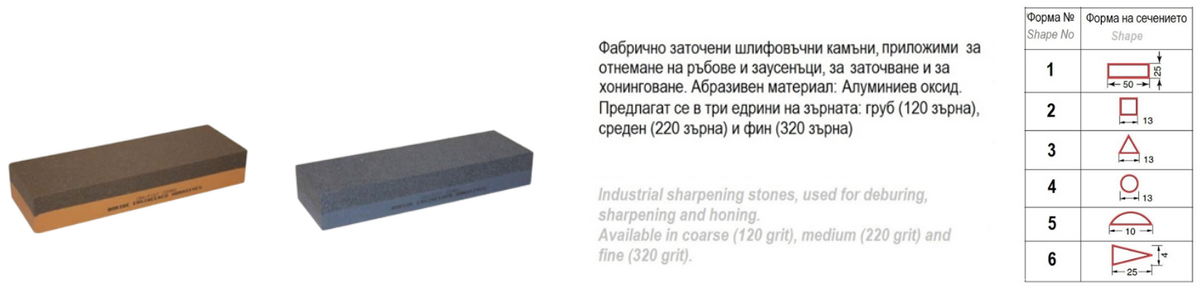
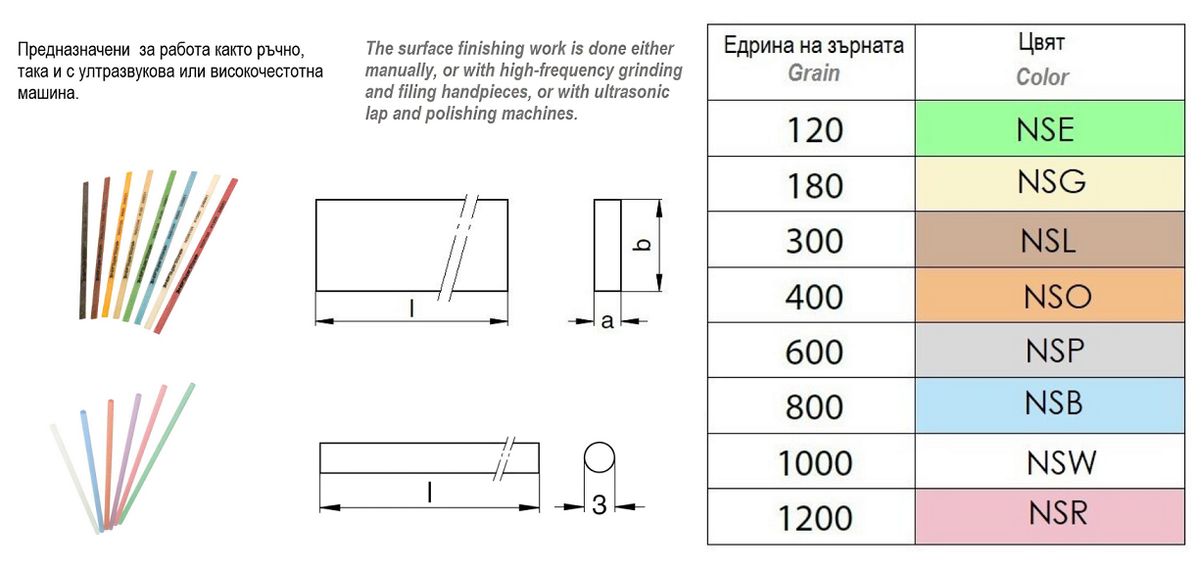
- Coarse (120–300 grit) – for rapid shaping and removal of deeper defects.
- Medium (400–600 grit) – for leveling and refining the surface.
- Fine (800–1200 grit) – for achieving a smooth surface ready for final polishing.
Polishing stones are made from high-quality abrasives that ensure long service life, wear resistance, and consistent material removal. They can be flat or round, depending on the workpiece and the accessibility of the area being processed.
Advantages of stone polishing:
• Allows working on small and complex parts.
• Provides control over material removal.
• Creates a foundation for a mirror finish during subsequent diamond polishing or buffing.
Overlapping of all scratches
From a purely physical standpoint, polishing is the process of creating a series of overlapping “scratches” that become progressively finer. To achieve this, it is important, when using increasingly finer stones, to change the angle (direction) relative to the marks left by the previous, coarser stone. In this way, the marks from one grit size are “erased” by the next stone with a finer grit size.
Tips for Manual Stone Grinding
• Do not use an excessively coarse stone.
• Always shape (form and level) the polishing stone with a grinding wheel or coarse sandpaper to ensure maximum contact with the work surface.
• Work carefully when shaping the polishing stone.
• Use sufficient polishing oil to prevent the stone from clogging.
• Hold the polishing stone firmly to control the direction, but apply only as much pressure as needed for the stone to cut.
• Ensure that the marks from the previous grit size are completely removed.
• Change the grinding direction with each successive grit size.
• Clean the work area thoroughly between each change of grit size.
• Keep each grade (grit size) of polishing stone in a separate container with honing oil.
• Be extremely careful when grinding along edges (parting line).
Grinding stones – HERE
• Composition: abrasives (aluminum oxide, silicon carbide) in a ceramic or resin bond.
• Characteristics: versatile, various grit sizes (coarse → fine).
• Usage: from rough shaping and material removal to preparatory work before the finer stones.
• Stage: initial and intermediate grinding stage.
Ceramic Stones - HERE
• Composition: pressed and sintered ceramic abrasives (aluminium oxide, silicon carbide).
• Characteristics: very hard, durable, and shape-retaining.
• Usage: for fine shaping, removal of EDM erosion marks, work in narrow channels and complex profiles. Suitable for hardened steels.
• Stage: intermediate finish before diamond polishing.
Super Diamond Stones - HERE
• Composition: metal or ceramic base with an embedded layer of industrial diamond grains.
• Characteristics: highest hardness, cut very quickly and cleanly.
• Usage: for machining extremely hard materials (hardened steels, carbides, ceramics, glass).
• Stage: for shaping or corrections when other stones do not cut effectively.
Polishing stones
• Composition: abrasive particles in a softer matrix (ceramic or resin).
• Characteristics: work more finely, remove micro-scratches, prepare for a mirror finish.
• Usage: for the final stages before pastes or felt.
• Stage: final finish on metal surfaces where high smoothness is required.
PT250 Polishing stones special very hard – HERE

PT450 Polishing stones medium hard – HERE
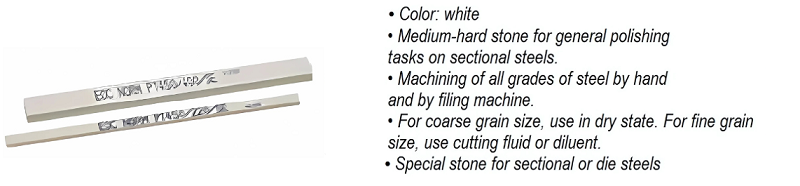
PT470 Polishing stones medium hard, for aluminium – HERE
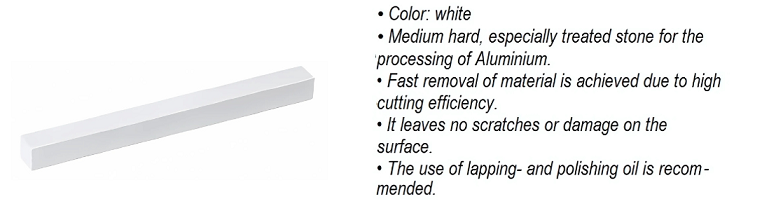
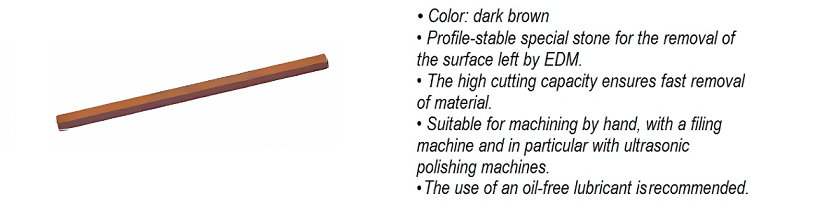
PT550 Profile-stable polishing stone – HERE
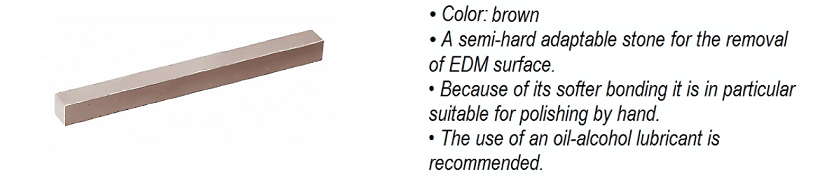
PT600 Semi-hard adaptible stone – HERE
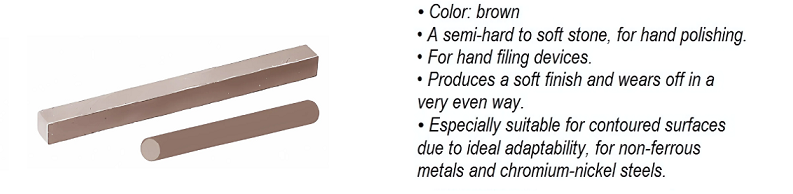
PT650 Semi-hard to soft stone, for hand polishing – HERЕ
PT700 Hard porous stone – HERE
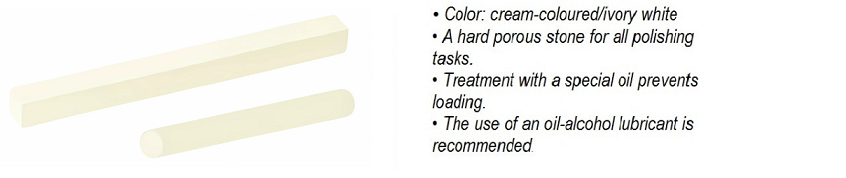
PT750 Hard stone, resin-bonded – HERE
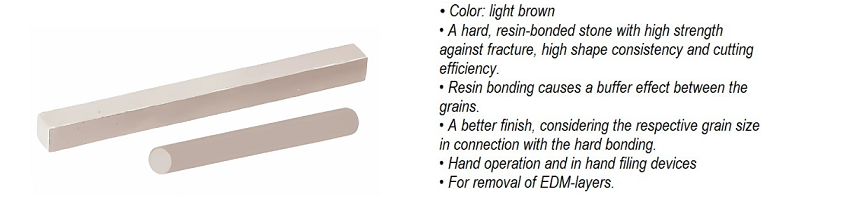
PT850 Soft-bonded, porous stone – HERE

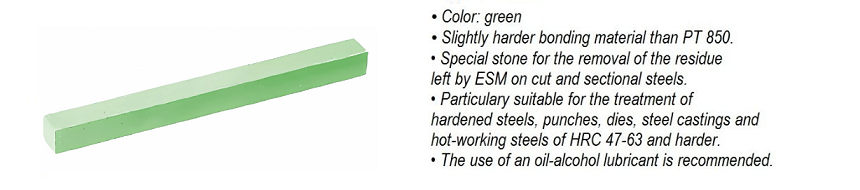
PT880 Slightly harder bonding material – HERE
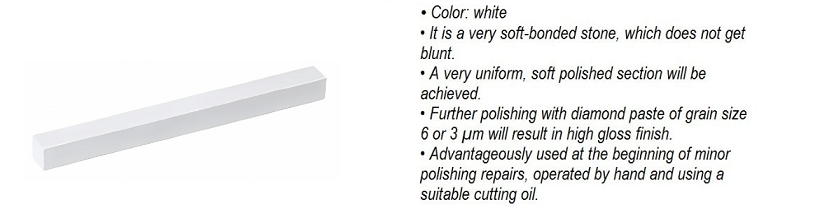
PT900 Very soft-bonded stone – HERE
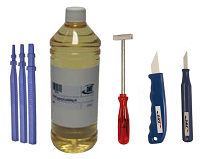
Supporting materials can be found – HERE
Due to differences in prices from our suppliers, prices are not displayed on the website. Therefore, it is necessary to request a quotation for the above-mentioned products before placing an order.
KRASCO

Did you like the article?
Please rate it with the stars below.